Gray Land Clear — Land Clearing in Gray, GA
Overgrown lots, dense brush, and leftover stumps can stall your plans for months. We handle everything from residential lot prep to full-acre timber clearing — with upfront site-based pricing and no hidden fees. Serving Gray, Haddock, Round Oak, and Wayside.
How much does land clearing cost in Gray Jones County?
Land clearing in Gray and Jones County typically costs $1,500–$5,000 per acre depending on tree density and terrain. Red clay soil common throughout middle Georgia requires proper erosion control and often mandates a Georgia EPD Land Disturbance Permit for projects exceeding one acre. Site-specific quotes account for property access and tree type within 24 hours.
Clearing Services — Every Acre, Every Condition
We match the right equipment and method to your property's tree density, terrain, and end use. Seven service categories cover everything from brushy half-acre lots to multi-acre rural timber tracts.

Land Clearing
Full-property clearing using excavators, bulldozers, and forestry mulchers matched to the property's soil and slope. Handles half-acre residential lots through multi-acre rural tracts.
Learn More →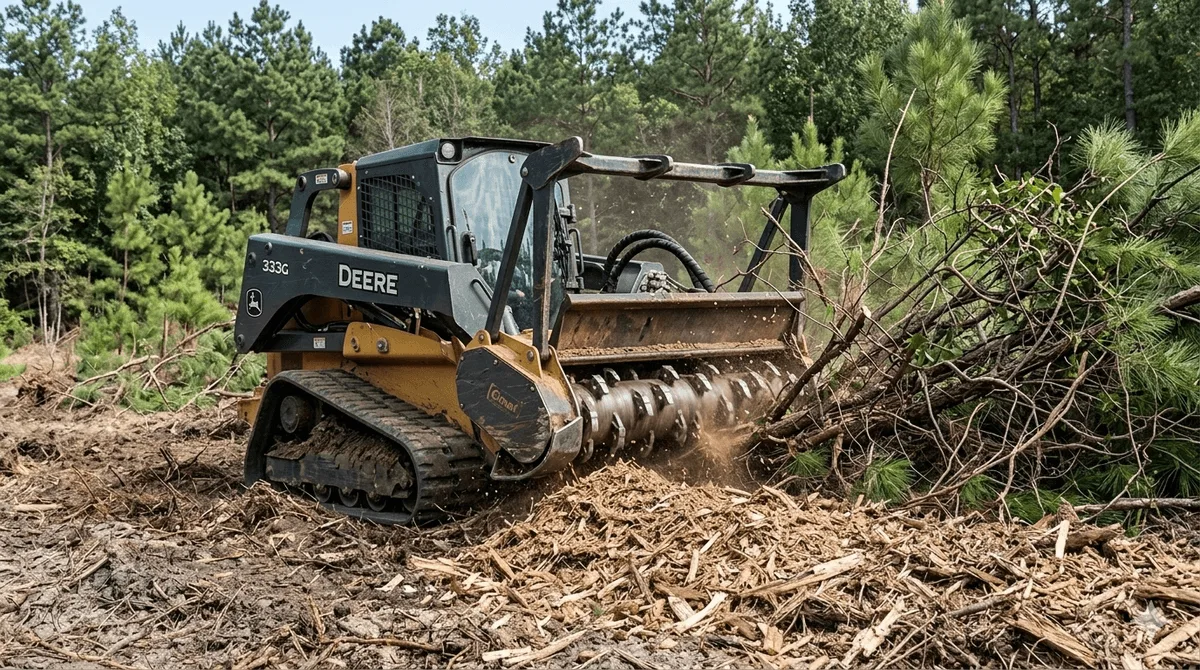
Forestry Mulching
Single-pass mulching that grinds standing trees and brush into natural ground cover — no hauling needed. Faster and cleaner than traditional methods, with less soil disruption and natural erosion control built in.
Learn More →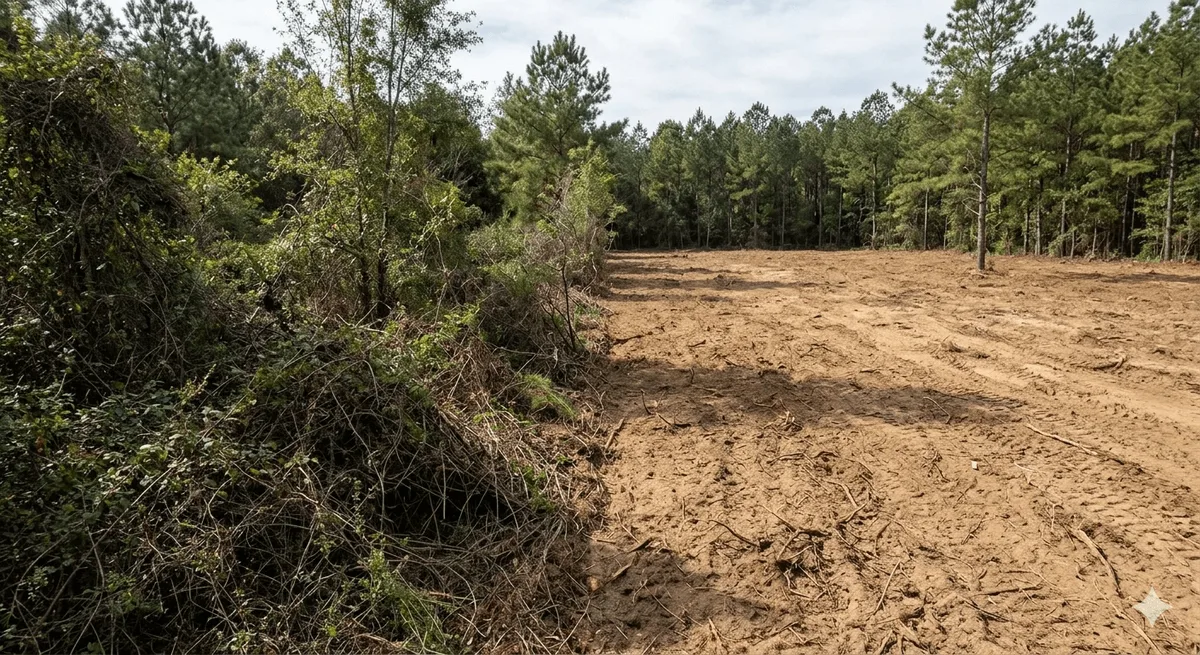
Brush Clearing
Removes overgrown kudzu, privet, vines, and scrub growth from residential and rural lots. Humid climate drives rapid regrowth — mechanical clearing removes invasives to the root for lasting results.
Learn More →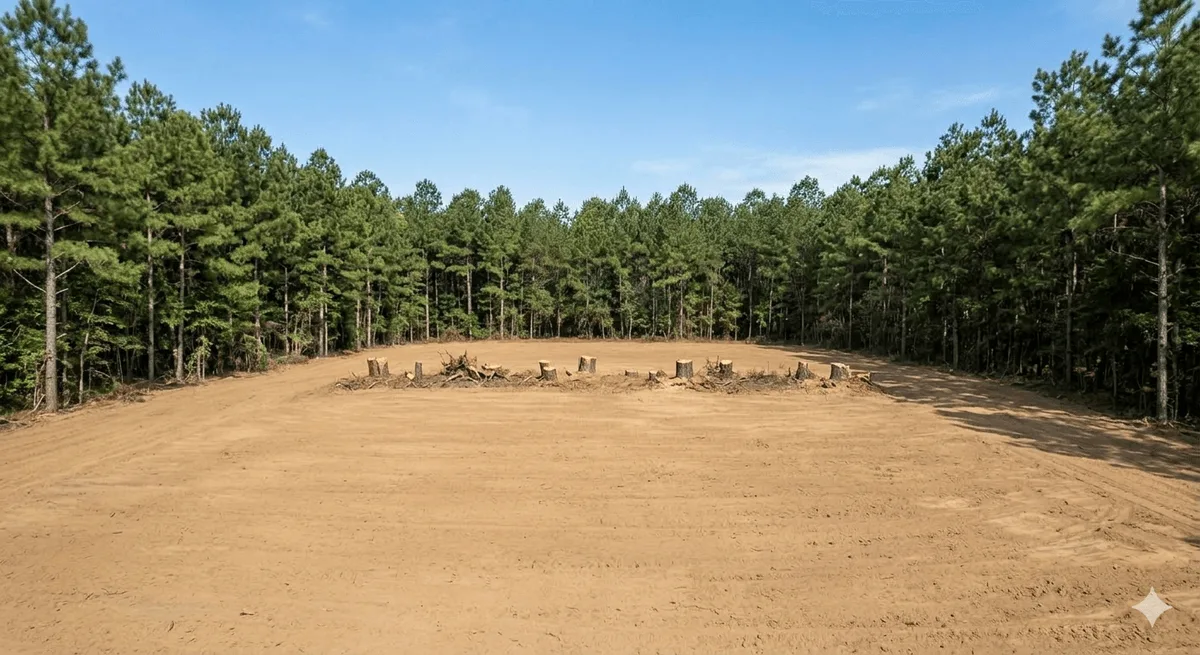
Lot Clearing
Prepares residential lots for new home construction, mobile home placement, or general improvement. Pricing based on tree density, slope, and site access — not a guess from a map.
Learn More →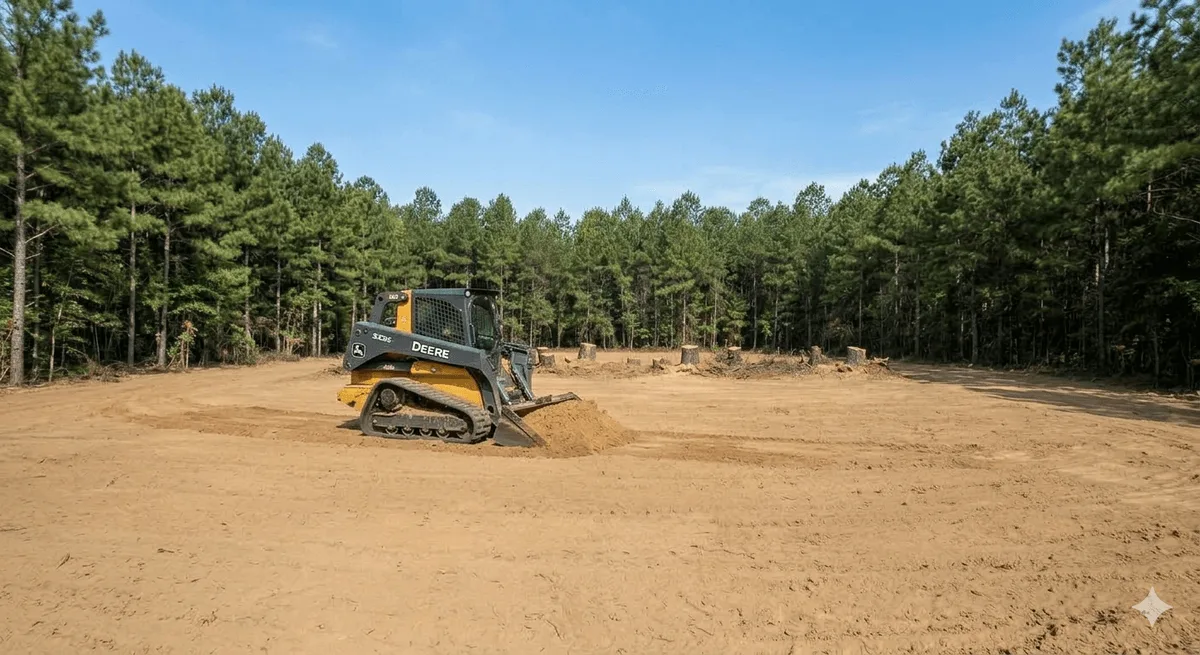
Site Preparation
Rough grading and drainage shaping after clearing — making sure the property sheds water properly. Clay-heavy soil needs precise grading to prevent pooling near foundations.
Learn More →
Stump Removal
Grinds stumps flush or below grade — standalone service or follow-up to clearing. Tackles stumps from timber harvest, storm damage, or prior work with no minimum lot size.
Learn More →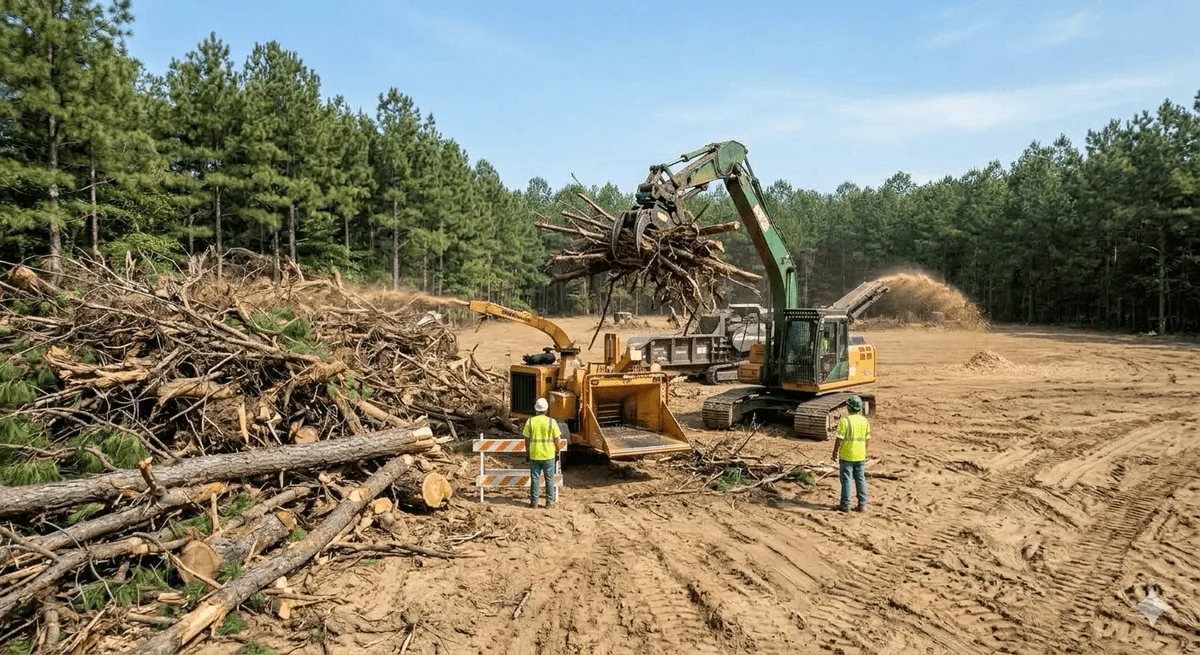
Debris Removal
Hauling and mulching of cleared trees, brush, and vegetation — leaving the property clean for the next phase. Choose haul-off, mulch-in-place, or pile for burning depending on your timeline and local rules.
Learn More →The Real Cost of Bad Clearing Equipment
Wrong Machines Destroy Topsoil
Red clay compacts hard under heavy equipment and turns to thick mud when wet. Tracked machines with proper ground pressure management protect the soil — wheeled equipment on clay lots creates ruts and compaction that cost more to fix than the clearing itself.
Blind Quotes Never Match Reality
Lot size, tree diameter, density, slope, and access all drive cost. A per-acre estimate without seeing the property produces a number that rarely holds. We quote after walking the site — so the price you get is the price you pay.
One-Pass Mulching vs. Traditional Clearing
For residential lots and moderate woodland, forestry mulching processes everything in a single pass, leaves natural ground cover that slows erosion on bare clay, and eliminates hauling trips. Traditional excavator clearing is better when grading is needed or large timber requires separate removal first.
Seven Signs Your Lot Is Ready to Clear
- Overgrown brush blocking your planned build area, driveway access, or survey stakes — land clearing restores usability
- Stumps and root systems remaining from timber harvest or storm damage
- Thick kudzu, privet, or vine growth reclaiming cleared land after years of neglect
- Property survey reveals tree encroachment on your planned structure footprint
- Building permit is pending but the lot hasn't had land clearing done for construction access
- Fence line obscured by years of vine and brush growth in middle Georgia's humid climate
- Pond site or pasture restoration requires aggressive vegetation removal on rural acreage
What You'll Pay to Clear Your Property
No surprise pricing. We visit your site before quoting — terrain, access, and vegetation density drive the real number.
Typical per-acre ranges for residential and rural clearing projects depend on tree density, slope, and whether stump removal is included. Forestry mulching — the most common method for residential lots — runs $1,000 to $3,500 per acre and is often more cost-effective because it eliminates separate debris hauling. Heavily wooded acreage with large timber and full haul-off can reach $6,000 or more per acre. All quotes follow a site assessment — terrain, access, and vegetation drive the final number.
Final pricing requires a property walk-through. Jones County terrain, access, and vegetation type all affect cost.
Clearing Questions, Straight Answers
Real answers for property owners — pulled from the terrain, weather, and regulations that actually affect your project.
Do I need a permit to clear land in Georgia?
A Land Disturbance Permit (LDP) from Georgia EPD is required when clearing disturbs one acre or more. Projects under one acre may still need local county permits depending on proximity to streams or wetlands. Large construction projects may additionally need an NPDES permit for stormwater management. Check with the Jones County Planning and Zoning office before starting.
Does land clearing include stump removal?
Stump removal is typically offered as an add-on rather than automatic inclusion — though forestry mulching handles stumps as part of the single-pass process. With traditional equipment like excavators or bulldozers, stumps may be ground, pulled, or left depending on the property's end use. We offer dedicated stump grinding as a standalone service or as part of a full clearing package — specify your preference when requesting a quote.
How long does it take to clear an acre of land?
Clearing one acre of lightly wooded or brushy land typically takes 4–8 hours with the right equipment. Dense pine or hardwood forest, heavy undergrowth, or challenging red clay terrain can extend that to a full day or more per acre. Forestry mulching is often faster than traditional clearing for moderately wooded properties because it processes trees and debris in a single pass.
What is the best method for clearing wooded land?
The best method depends on your property's tree density, end use, and access. Forestry mulching is ideal for residential lots and moderate woodland where you want fast results with minimal soil disturbance and no debris hauling. Excavator or bulldozer clearing is better for large acreage or when grading is needed afterward. A site assessment ensures the right equipment is matched to the property.
What is forestry mulching and how does it work?
Forestry mulching uses a tracked machine with a rotating drum mulcher head to grind trees, brush, and undergrowth into wood chip mulch in a single pass. The mulch stays on the ground as natural cover that suppresses weeds, reduces erosion, and decomposes over time — particularly beneficial in clay-heavy soil where bare ground erodes quickly after traditional clearing. No separate hauling is needed, which reduces cost and truck traffic on the property.
Can land clearing cause soil erosion?
Yes — clearing can cause significant erosion if proper controls aren't taken, particularly with red clay soil and frequent summer rain events. Georgia EPD requires erosion and sediment control plans for projects over one acre. Best practices include installing silt fences, seeding bare soil quickly after clearing, and using forestry mulching where possible to leave natural ground cover in place.
What equipment is used for land clearing?
Clearing commonly uses forestry mulchers, excavators, bulldozers, and brush hogs depending on vegetation type and lot size. Red clay soil requires equipment with sufficient ground pressure management to avoid excessive compaction — tracked machines are preferred over wheeled equipment on softer soils. Stump grinders handle removal as a follow-up to mechanical clearing.
When is the best time to clear land in Georgia?
Late fall through early spring — roughly November through March — when deciduous vegetation is dormant, ground conditions are firmer, and the risk of disturbing nesting wildlife is lower. Summer months bring heavy rain that turns red clay into thick mud, making equipment access difficult and increasing erosion risk on freshly cleared ground. Clearing during dry winter months also produces faster turnaround since debris dries more quickly.
Does clearing land increase property value?
Clearing overgrown or wooded land generally increases property value and marketability, particularly for rural tracts where buyers are evaluating build potential. Cleared land is easier to survey, easier to finance, and more attractive to contractors and home builders who need direct site access. The increase depends on intended use — cleared lots ready for construction see the highest improvement in perceived value.
How do I clear heavily wooded land?
Heavily wooded land typically starts with felling and removing large-diameter trees, followed by excavator or bulldozer clearing of the remaining understory and stumps. Forestry mulching can handle small-to-medium trees and brush in a follow-up pass. The local pine and hardwood mix often requires a combination of methods to clear efficiently while managing soil compaction on clay-heavy ground.
What is the difference between land clearing and grubbing?
Land clearing refers to removing above-ground vegetation — trees, brush, and undergrowth — while grubbing specifically means removing root systems and stumps below the surface. Grubbing is required when the land will be used for building foundations or infrastructure where root decay underground could cause settling. For most residential lots, clearing plus stump grinding to below grade is sufficient for construction-ready site prep.
Can I clear land myself without equipment?
Manual clearing is feasible only for very small areas — a quarter-acre or less of light brush and small saplings. The humid climate produces dense, fast-growing understory including privet, kudzu, briars, and young pines that quickly overwhelm manual methods on larger lots. Professional equipment reduces clearing time from weeks to hours and handles stump removal, root grubbing, and debris processing that manual labor cannot practically accomplish.
What happens to trees and debris after land clearing?
Cleared trees and debris can be handled several ways depending on your property plan. Forestry mulching grinds everything in place, leaving a wood chip layer on the ground. Traditional clearing produces logs and brush that can be chipped, hauled off, or piled for burning where permitted. We offer haul-off, mulch-in-place, and pile-for-burning options — the right choice depends on your timeline and what the site will be used for after clearing.
Is burning cleared debris legal in Georgia?
Burning cleared debris is generally legal but regulated. The Georgia Forestry Commission requires authorization before conducting open burns, and burns may only occur during permitted hours — typically after 10am and completed one hour after sunset. Burns may be restricted during drought conditions or air quality alert days. Check with the Georgia Forestry Commission and local authorities before scheduling any burn.
How do I prepare land for construction after clearing?
Preparing cleared land for construction involves rough grading to establish proper drainage slopes, compaction testing if the soil has been disturbed deeply, removal of remaining root systems that could cause settling, and staking the building envelope per the survey. Red clay soil compacts well but drains slowly — a site disturbed by heavy clearing equipment often needs grading work to prevent water pooling near the foundation. A site assessment after clearing guides the grading plan.
What should I ask a land clearing contractor before hiring?
Key questions include: What clearing method do you recommend for my property and why? Does your quote include stump removal or is that separate? How will debris be handled — hauled off, mulched, or piled? Are you familiar with Georgia EPD land disturbance permit requirements for my project size? Will you provide a written quote after seeing the property in person? A site-specific quote rather than a per-acre estimate ensures the price reflects your actual terrain and vegetation.
Do I need to clear land before drilling a well?
Some degree of clearing is usually required before a well drilling rig can access the site. Drilling rigs are large, heavy machines that need a cleared path for truck access and a level pad at the drill point — typically at least 30 by 30 feet. If the planned well location is wooded or overgrown, brush clearing or selective tree removal around the access route and drill site is the minimum needed before the crew can set up.
Do I need to clear land before installing a septic system?
Clearing is almost always required before septic system installation. A septic system needs a cleared and graded area for the tank, distribution box, and drain field — and the drain field alone can require 2,000 to 4,000 square feet of relatively flat ground depending on soil percolation rates. Local red clay soil often requires larger drain fields due to slower percolation, which means more clearing. Trees and large root systems must be removed from the drain field area to prevent future damage to the septic lines.
Many property owners who need land cleared are also planning new construction — which often means installing a new septic system on the same parcel. Gray GA Septic serves the same communities with septic installation, pumping, and inspection.
Cleared land often needs a gravel driveway before construction crews can reliably access the site. Gray Gravel installs and grades gravel driveways for properties at every stage of development.
Rural properties being cleared for new construction frequently need a new well drilled on the same parcel. Gray Well Drilling serves homeowners with residential well drilling, pump repair, and water testing.
Serving Jones County
We clear land throughout Jones County — from Gray's residential lots to Haddock's rural acreage and everything in between.
Jones County Communities
We serve all of Jones County — from Gray east to Haddock and Round Oak, and throughout the rural communities in between. If your property is in Jones County, we can clear it.
The county sits east of Macon in middle Georgia, with a dense mix of rural residential properties, timber land, and agricultural acreage — all on the heavy red clay that demands experienced operators and proper erosion management.
Your Property, Your Timeline, One Free Quote
When your land is overgrown and you're ready to build, every day of delay costs you. Tell us what you need cleared, and we'll follow up with site-based pricing — not a ballpark guess.
We serve all of Jones County. All quotes follow a property walk-through — we don't quote terrain we haven't seen.
Request a Free Quote
Serving Gray & Jones County, Georgia